
Reign check
Think twice about that beach walk as King Tides arrive
Special report
For the TODAY
Political divisions are more pronounced than ever before. Economists are wary of the coming months, spooked by tariffs and the growing belief that hypervalued Ai stocks are creating a market bubble that could burst at any moment. In short, there’s a lot to be concerned about in our country right now — a pile of tinder and kindling just waiting for a spark.
But it’s a conflation, not a conflagration, that keeps me up at night: I’ve had it with people misusing or misunderstanding the relatively simple concept behind King Tides.
“Wait, what? Ukraine. Gaza. Political polarization. All this, but it’s a little harmless ignorance about the ocean that really bothers you?”
I hear you, dear reader. Let’s just say we each have our own triggers.
Project 2025 Tides
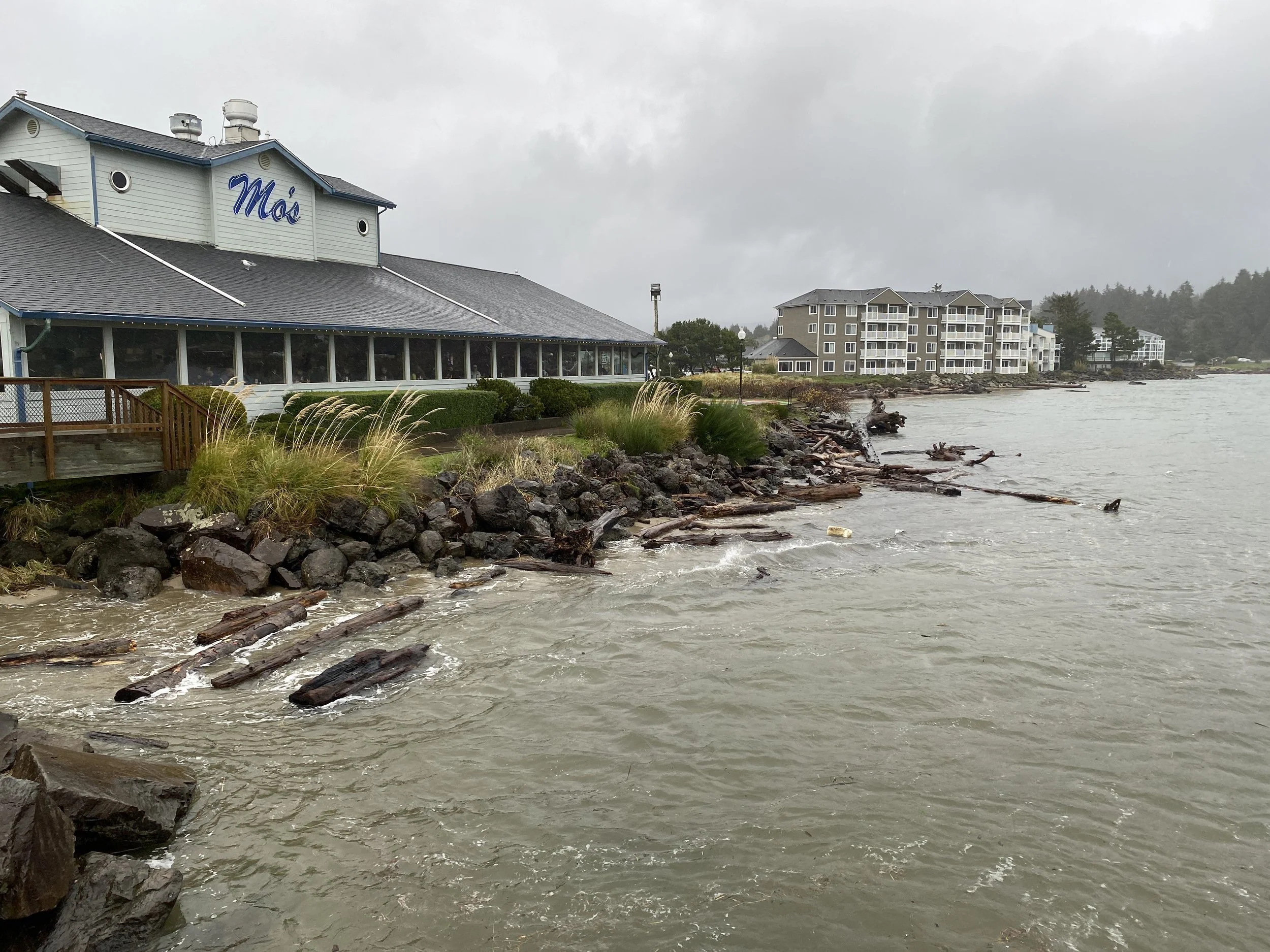
More than a few times, this publication has explained this topic in detail, and described the King Tides Project, which seeks to rally the public behind a simple idea: helping capture unusually high tide events on camera to better understand what is in store for the Oregon Coast in the not-too-distant future, as we deal with rising sea levels.
The photos they seek are not of crashing surf and spray, but rather of wetlands, estuaries and inland areas that could be impacted by unusually high tides.
Recently, I shared my frustration with Rhiannon Bezore, the Oregon King Tides Project coordinator for the Oregon Department of Land Conservation and Development.
I can imagine Bezore’s first draft in response to my outreach: “Wait, what? Government shutdowns? An emboldened North Korea? Given all this, you’re worried about incomprehension of basic nautical terminology?” Fortunately, she sent me her second draft in reply.
“The term ‘king tide’ is a non-scientific term that refers to the highest winter tides that occur each year,” she wrote. “These extreme high tides occur when the moon’s orbit comes closest to the Earth, the Earth’s orbit is closest to the sun, and the sun, moon and earth are in direct alignment, all of which increase the gravitational pull on the tides, causing the highest (and lowest) tides of the year.”
“Since King Tides occur in winter,” she continued, “these high tide events often coincide with storm events and large swells. While the combination of all the various weather conditions can increase the impact of the tides on the coastal communities, they are often mistaken for King Tides themselves.”
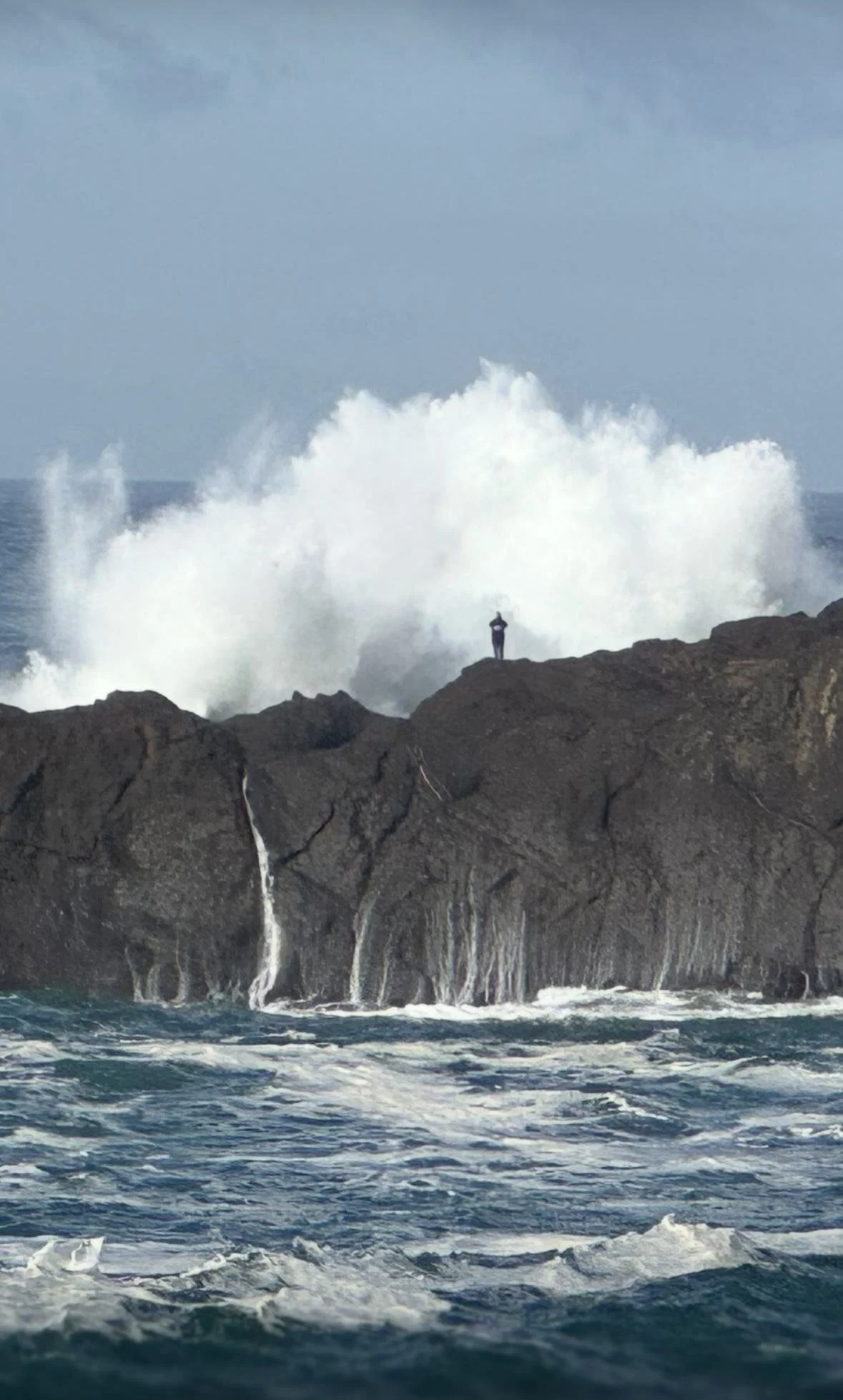
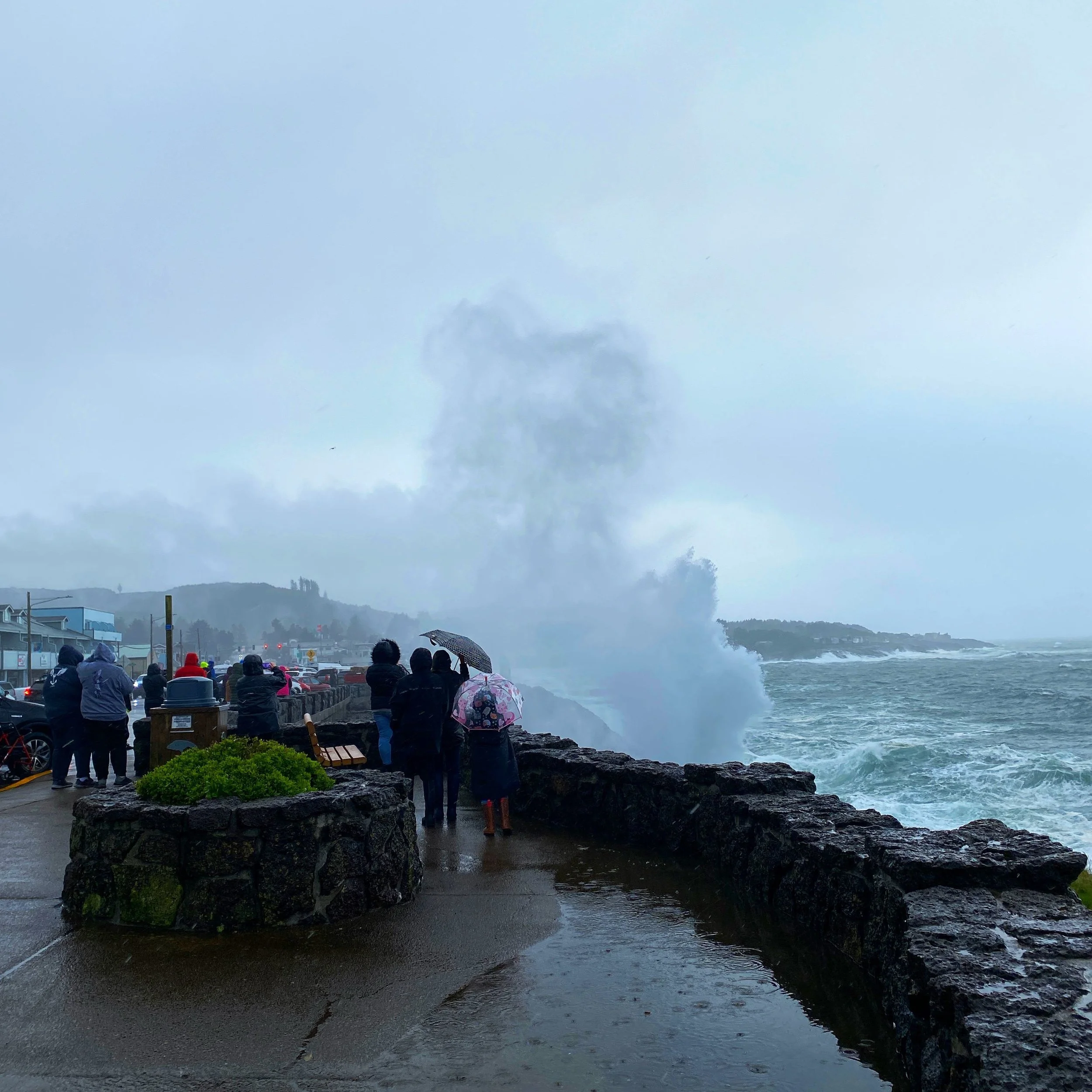
Bezore is correct that winter storms often drive large swells. And, we frequently see large swell events when the weather is otherwise great. Distant storms off the Aleutians and elsewhere are primary drivers of those swells, which travel across vast stretches of ocean before reaching the Central Coast, where they smash into the coast regardless of the current weather conditions.
That’s just swell
It’s likely that one or more of the three big King Tides events coming this winter will coincide with a high-surf event — but could you notice the difference?
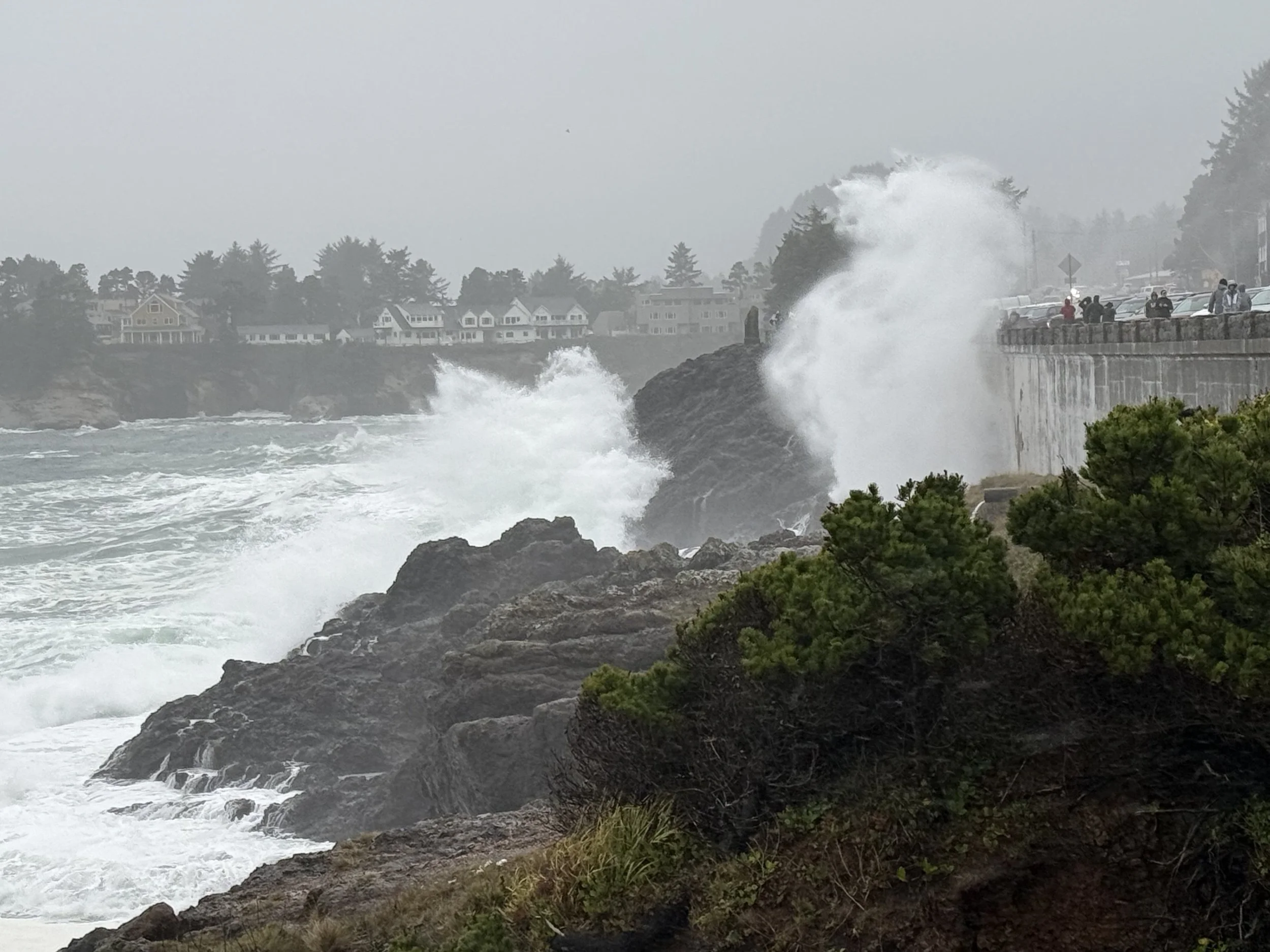
Back on October 10, not a King Tide event but rather a run-of-the-mill high tide, Newport’s high tide was 9.3 feet. On Nov. 5, a King Tide day, the high will be 9.8 feet. That’s six inches difference, or 5 percent of the total height above zero feet. Contrast that to the swell; while the swell was three feet on the afternoon of Oct. 10, November storms can generate swells of 30 or more feet. There is zero chance anyone could tell the difference between a wave crashing on a seawall, when driven by 30-foot swells, when the tide is 9.3 feet versus 9.8 or even 10.2 feet. Big swells and high surf simply are not tides — “king” or otherwise.
I love watching winter storms, and marveling at the power of the ocean. That said, in recent years, I find myself hoping for calm seas around King Tides, just to confuse the … tidal influencers. Bezore pointed out that during the 2023-24 winter season, we saw just that — relatively calm seas coinciding with King Tides events. Those tides, she said, “may not seem as ‘dramatic’ (i.e. less flooding, erosion, smaller wave conditions) but are still the highest tides of the year and still caused by the solar and lunar alignments.”
The final King Tide period last winter was Feb. 8 to 10. Despite that, a social media post from February 26, 2025, in Depoe Bay featured cool footage of a spouting horn firing off due to strong swells. The video’s description read, in part: “Ever wonder what it’s like to drive through a King Tide that reaches over from the sea to the businesses across four lanes of highway…”
Not a tide.
Not a king.
#NoKings
Wait, what? Seems I’m letting a little conflation into my conflagration after all.
This year’s King Tide dates are:
November 5-7, 2025
December 4-6, 2025
January 1-4, 2026
Swell will build from around six feet on Tuesday, Nov. 4, to 18 feet or higher on Thursday, Nov. 6, so expect hazardous conditions on the beach throughout the King Tides period, resulting both from high tides and ocean conditions. On Friday, Nov. 7, the ocean will calm slightly, but swells could build to 20 feet or more on Sunday, Nov. 9.