
Making the cut
One lawmaker is going the extra mile to cut transportation costs
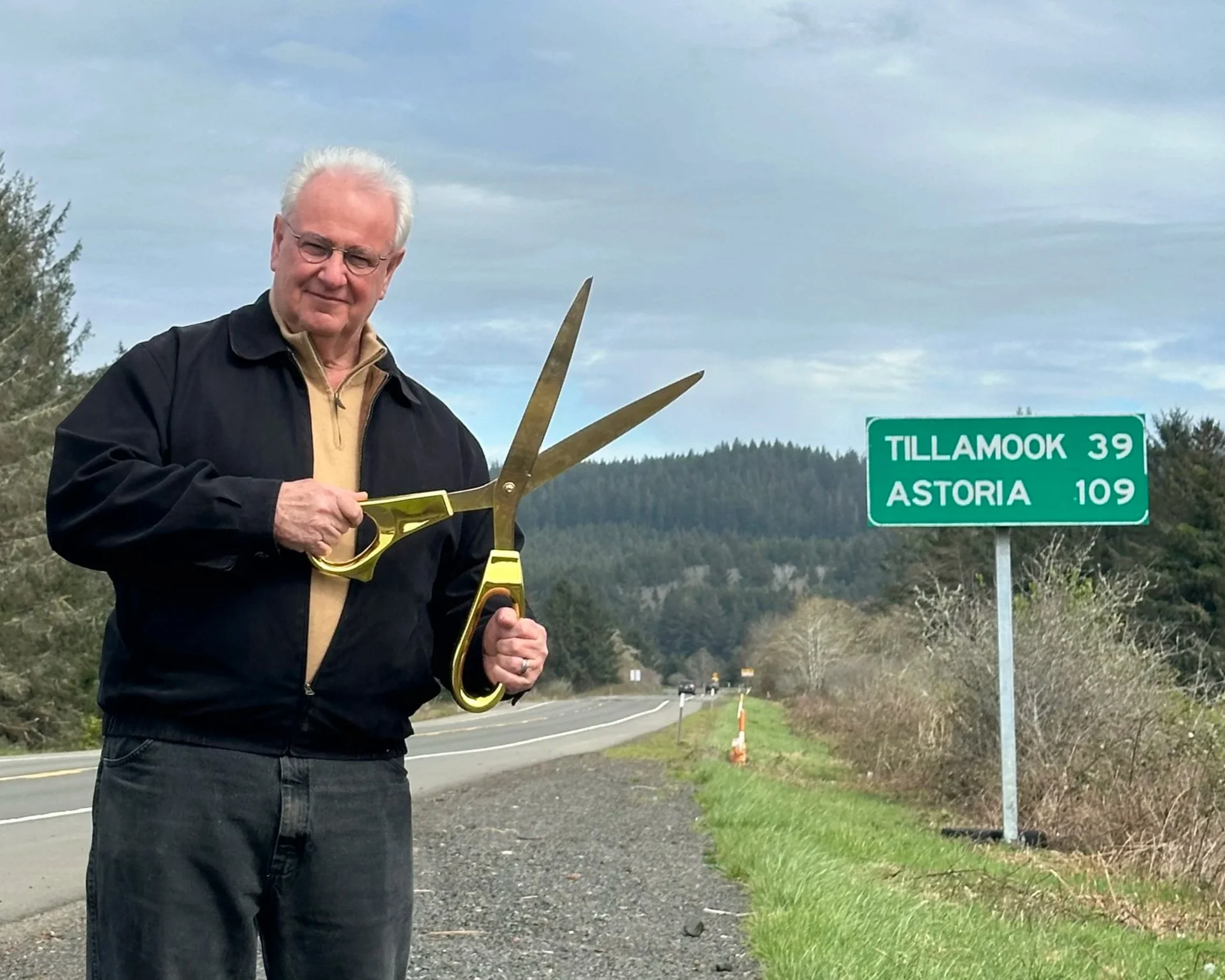
State Rep. David Gomberg’s plan to remove select portions of Highway 101 will bring Tillamook and Astoria closer to Central Coast residents
Driving north from Lincoln City, Oregon Coast TODAY investigative reporters noted that mile markers went immediately from 111 to 105 with nothing in between. Wondering what happened to the missing mile posts, we reached out to Representative David Gomberg who co-chairs the Department of Transportation budget committee.
“This is our newest strategy to pay for highways and bridges,” Gomberg explained. “If we simply remove a few miles here and there, we reduce the total amount of highways we have to maintain. And the good news is the public can still drive from one end of the state to the other with no interruption.”
“It’s simple math,” Gomberg said during an interview by the side of Highway 101, the main thoroughfare in his coastal district. “Fewer miles of highway mean lower maintenance costs, which makes our precious dollars go further.”
“Next year we plan to re-number each end of the bridge in Newport.”
The project relies on a new and controversial process known as “Geographic Tapering,” pioneered by Felix Lügner, director of the National Office of Progressive Engineering.
“Imagine you have a pair of pants that are too wide at the waist,” Lügner said. “In order to make them smaller, you concertina the fabric together and sew it into place. It’s essentially the same thing with the highway: we pull out what we don’t need and sort of crinkle up the surrounding geography to cover the gap.”
“It will lead to what we call ‘Artificially Enhanced Undulation’ throughout the affected areas,” he added. “But those deep gulleys should become ideal habitat for some new and exciting species, which we see as another benefit. I mean, who wants to look out the car window and just see another boring old deer?”
Transportation funding has been, by some distance, the most contentious issue state lawmakers have grappled with this year. A citizen-led effort to repeal a package of tax and fee increases has led to fears that highways and bridges could crumble for lack of basic maintenance.
But now a number of creative funding sources are being evaluated.
Naming rights on construction zone pilot vehicles is one good option. For example, the lane closures on Cascade Head would now be led by a car that doesn’t just say “Follow Me,” but instead, “Follow Me to Tillamook County!”
Another option is the sale of advertising on the construction cones that dot Highway 101. Reportedly, the Oregon Coast Visitors Association is already negotiating for a campaign to place messages on the orange barrels that read, “Spend Longer at the Oregon Coast.” Meanwhile Phil Knight has offered $27 million to replace the orange barrels with bright green and a NIKE swoosh.
Could the tapering project go too far? Lügner said widespread use of the process could leave Oregon noticeably crimped at its Western edge — a situation that might eventually require the iconic Astoria-Megler Bridge be lengthened in order to ensure Highway 101 remains connected.
“I really see that as a Washington issue,” Gomberg said. “As you can imagine, I’ve got my hands full here.”
The pilot Highway 101 Tapering Project will be completed on Wednesday, April 1, with a small ribbon-cutting ceremony at what used to milepost 107. Due to traffic safety issues, as well as concerns about guests disappearing as well, the public is asked not to attend.