
Horn to be wild
Siletz Bay Music Festival presents Miles Davis and John Coltrane tribute
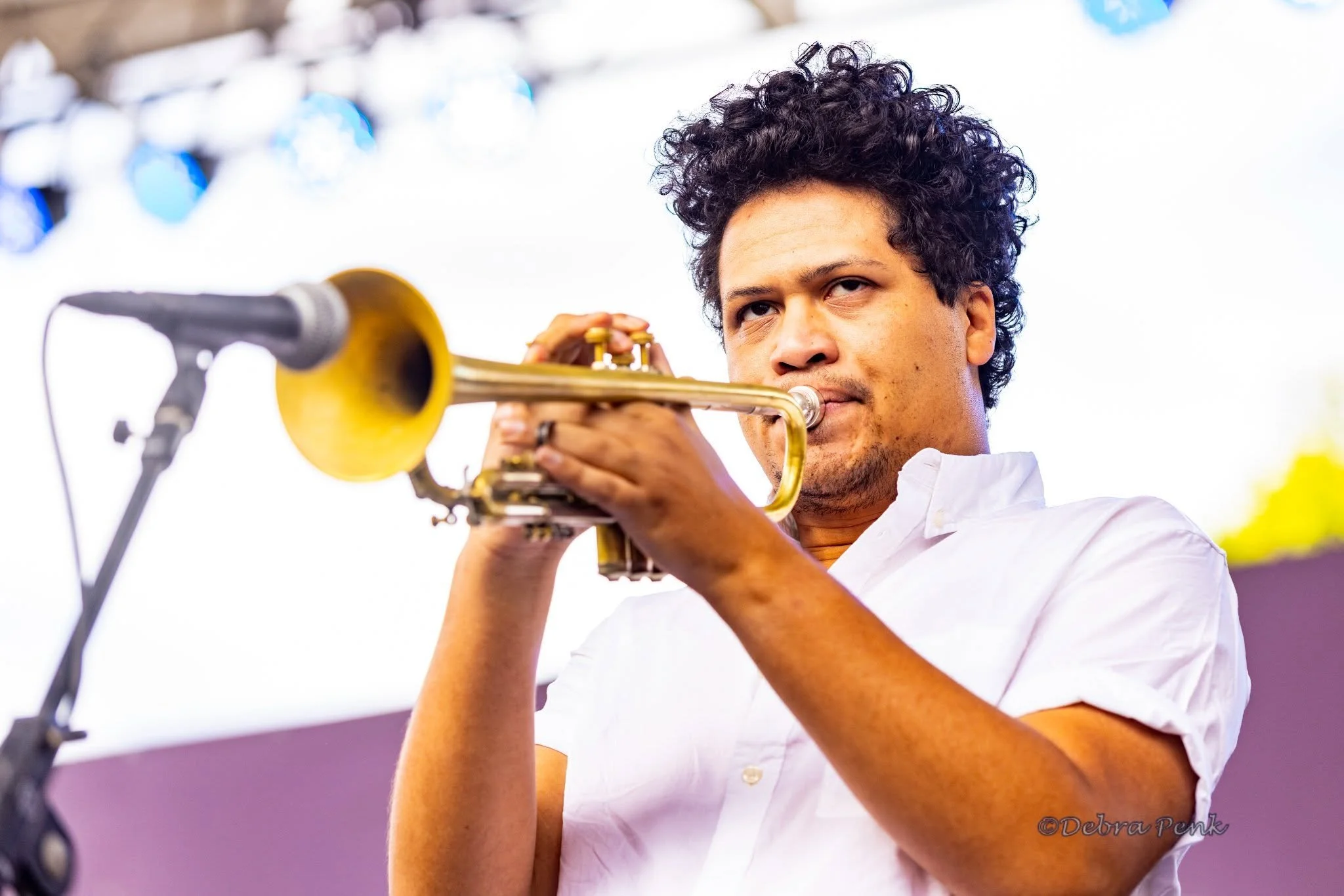
Noah Simpson • Photo by Debra Penk
By Eliot Sekuler
For the TODAY
The music of two towering figures in American jazz — Miles Davis and John Coltrane — will ring out at the Siletz Bay Music Festival on Thursday, Aug. 20, as acclaimed Portland-based trumpeter Noah Simpson leads a quintet in a centennial tribute to the two jazz giants.
Joining Simpson will be Olivia Fields on tenor sax, Charlie Brown III on piano, Garrett Baxter on bass, and Noah Mortola on drums — all prominent voices in Portland's jazz community.
For the 32-year-old Simpson, who teaches jazz trumpet at Reed College, the touchstone for the evening traces back to a specific recording: Davis and Coltrane playing "Stella by Starlight" live in Olympia, Washington, in the late 1950s or early ’60s.
"It's both disjointed and yet so together," Simpson said. "They're able to go in and out of time, in and out of form, in and out of different kinds of harmony."
That recording taught him as much about the philosophy of live performance as it did about trumpet playing — the idea that musicians should reach beyond what they rehearsed, together, in real time.
Davis and Coltrane would both be turning 100 this year and, for Simpson, their restless, forward-looking approach to music still feels urgent in 2026.
"What kind of music would they be making if they were making music now?" he said. "I think it'd be crazier than you and I could ever imagine."
Earlier this year, Simpson reassembled a full nine-piece band in Portland to perform Davis' "Birth of the Cool" arrangements for the centennial. His instruction to the band was simple: play the arrangements faithfully, but don't imitate the original soloists.
"I don't want any of you to play like your Gerry Mulligan or J.J. [Johnson] and I'm not gonna try to play like Miles,” Simpson said. “I want you to play like you."
That same philosophy shaped his approach to the Siletz Bay program.
"Miles would hate it if I tried to imitate him," Simpson said. "I was never supposed to sound like Miles Davis. I was always supposed to be inspired by him." He recalled meeting some of his own heroes and offering to play their music back to them, only to be told they'd rather hear his voice than an echo of their own.
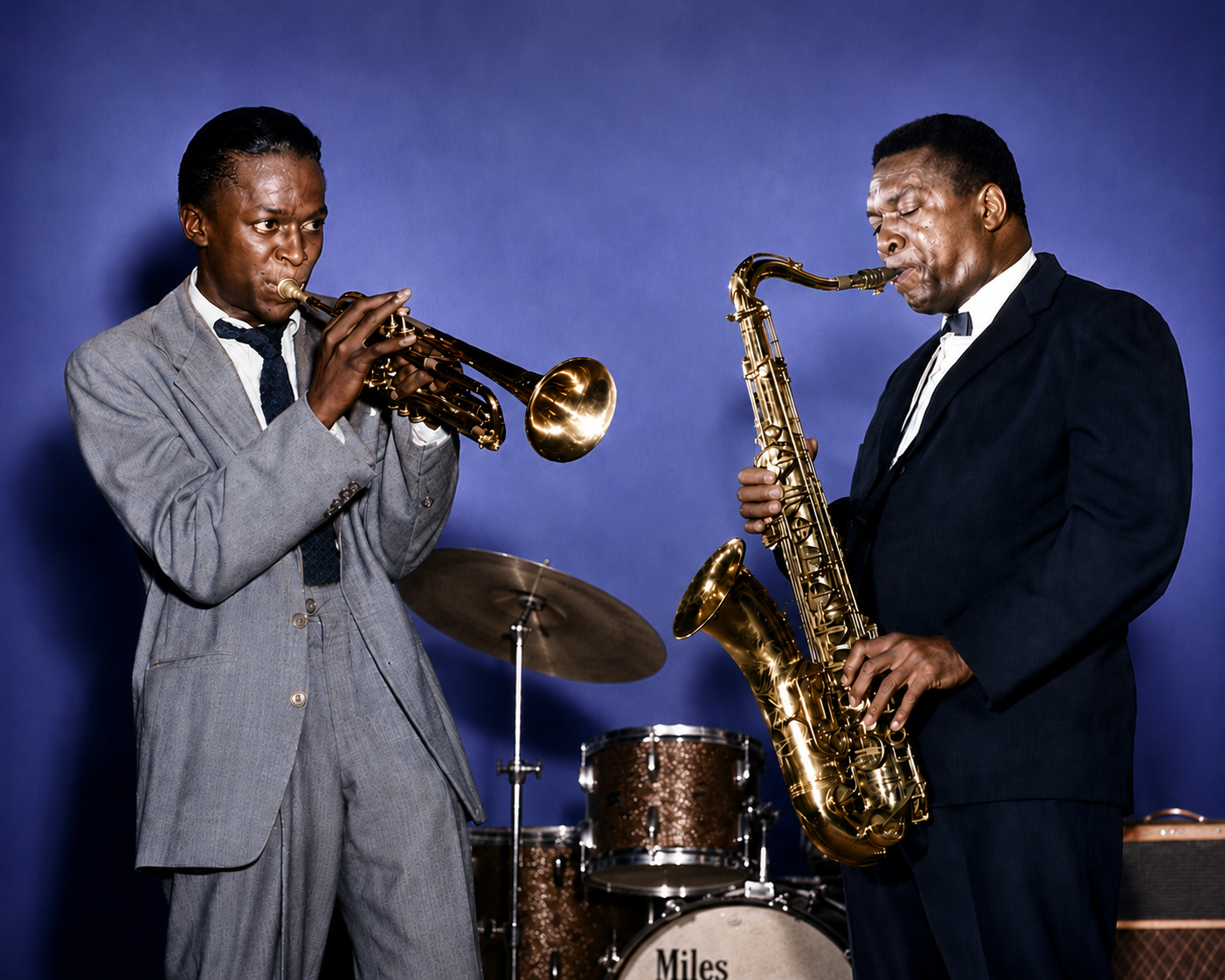
Miles Davis and John Coltrane
The quintet format carries weight for Simpson, who calls it "home" — a traditional configuration that lets a band lean into decades of jazz history while still finding room to push each other in new directions. He credits saxophonist Fields, whom he has known since her time as a graduate student at the University of Oregon, with driving that dynamic:
"Just by the way that she's going to sound, it's going to inspire me to play a certain way,” he said. “Which I'm sure will inspire her, which will inspire the rest of the band."
He described pianist Brown III as "practically family," bassist Baxter as a longtime touring collaborator and drummer Mortola as a newer but trusted addition to his circle.
The set list will draw from familiar and lesser-known corners of the Davis-Coltrane catalogue. Audiences can expect "Blue in Green" from "Kind of Blue," the standard "I Could Write a Book," featuring one of Simpson's favorite Coltrane solos, and the obscure original "Little Melonae."
"Blue in Green" carries personal weight for Simpson, who traces his connection to the tune back to an iPod loaded with "Kind of Blue."
"I remember I was laying in bed, and I sat upright," he said of first hearing Davis's opening notes. "I realized the way that they solo, they double the time, then they quadruple the time, then they go all the way back to the original time. I didn't realize you could even do that and have it sound really, really nice."
Asked what makes Davis instantly recognizable after only a few notes, Simpson is emphatic.
"Miles could play three notes that anyone else could have played,” he said, “but the way he decides to play them — that's how you know it's him."
It's a lesson Simpson passes on to his own students: vocabulary and grammar can be taught, but a musician still has to find their own voice, the way Davis did while still in his early 20s.
That balance of reverence without imitation is what Simpson hopes will define his Siletz Bay Music Festival performance.
The Thursday, Aug. 20, concert takes place at 7:30 pm at the Lincoln City Cultural Center, located at 540 NE Hwy. 101. Tickets are $55 for adults and $15 for students. For tickets and more information, go to SiletzBayMusic.org.