
A Pinch of Salt
By Donna Marie Riani
Ok, I know you just made a face when you saw this week’s column is about beets. You either made a happy face or a yuck face. You either love them or you really don’t.
Often when I am teaching a cooking class, someone will approach me and tell me in advance that they don’t like a particular ingredient. They tell me this so I am not offended when they don’t eat it, which I never am. Instead, I challenge those people to give that food another chance.
Maybe it’s not the ingredient that they didn’t like. It could be that they didn't like the way it was prepared. I invite them to re-experience that ingredient in a new way. So, I am putting that challenge forward to those of you that think you don’t like beets.
Beets grown in Oregon come in a variety of beautiful colors, such as red, gold and candy striped. Beets are sweet but they also have a complex, earthy flavor. Oregon grows beets for sugar and for eating.
Sugar is a much=loved and highly consumed ingredient worldwide, so sugar beets are needed., Grown primarily for making sugar, they can be eaten but they are just sweet — there is not much complexity to them.
Beets are usually planted in the spring and harvested in late summer or early fall, but they keep well and store beautifully in the winter months. That’s why they are considered a winter vegetable.
Beets can be juiced, roasted and pickled, making them quite versatile. They are a staple in many Eastern European countries. Borscht, a beet soup, is beloved by many and considered a dietary staple. Let’s not forget the beet tops or greens. They are delicious sauteed or juiced. Just be aware that the older greens can be a little bitter — it’s the younger greens that are tender and mellower in flavor.
Beets are high in antioxidants and they are full of folate, vitamin C and vitamin A. Beets are also prized as a natural food coloring or fabric dye. Anyone who has worked with beets can attest to their dying power.
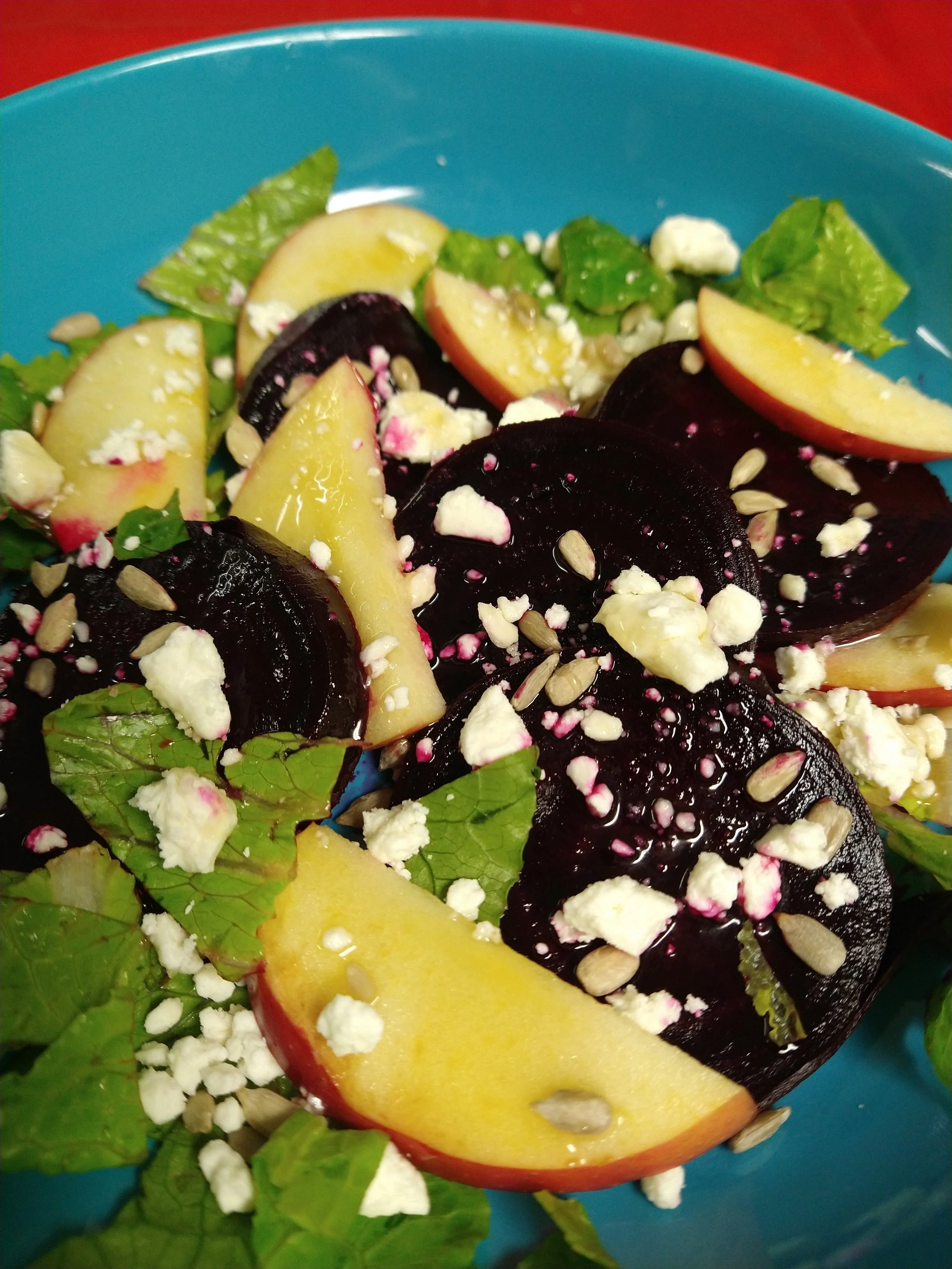
This week’s recipe is for a composed salad. While most salads have all the ingredients tossed together in a bowl with the dressing, this salad is arranged artfully on a platter and the dressing is drizzled over. It looks so pretty with all its colors and textures, almost like a painter's palette. This salad doesn’t rest on its good looks though, it's also delicious. It’s tart, sweet, salty, soft and crunchy. I promise, you can’t beat this beet salad!
Beet Salad
4 medium beets, any color you like, wash and pat dry
olive oil, for drizzling
1 small apple, choose your favorite variety, thinly sliced
1/3 cup roasted seeds or nuts, roughly chopped
2 ounces goat or feta cheese, crumbled
2 1/2 cups soft salad greens, such as butter lettuce, arugula, spring mix or frisée, roughly chopped
Salt and black pepper, to taste
Vinaigrette ingredients
1/4 cup sherry vinegar or balsamic vinegar, your choice
2 teaspoons maple syrup
2 teaspoons Dijon mustard
7 tablespoons extra virgin olive oil
1/2 teaspoon sea salt
1/4 teaspoon black pepper
Preheat the oven to 400 degrees. Place each beet on its own piece of aluminum foil and drizzle with olive oil and lightly salt. Wrap the foil around each beet and place on a baking sheet. Roast in the oven for about 45 to 60 minutes or until the beets are fork tender. This step might take longer if your beets are large.
Remove the beets from the oven and remove the foil. Set aside to cool.
When the beets are cool enough to handle, peel off the skin with a knife or by hand.
Slice the cooled beets into quarter inch thick round slices.
Whisk all the vinaigrette ingredients in a medium bowl. Set aside.
You can now assemble the salad on a large platter. Start by scattering the salad greens over the platter. Next place the beet rounds. Place the apple slices over and around the beet slices.
Sprinkle the nuts or seeds and crumble on the cheese.
Drizzle the vinaigrette over the whole salad.
Sprinkle a little sea salt and freshly cracked black pepper to season the salad. This will serve four to six people as a first course.