
Siletz has the (pow) wow factor
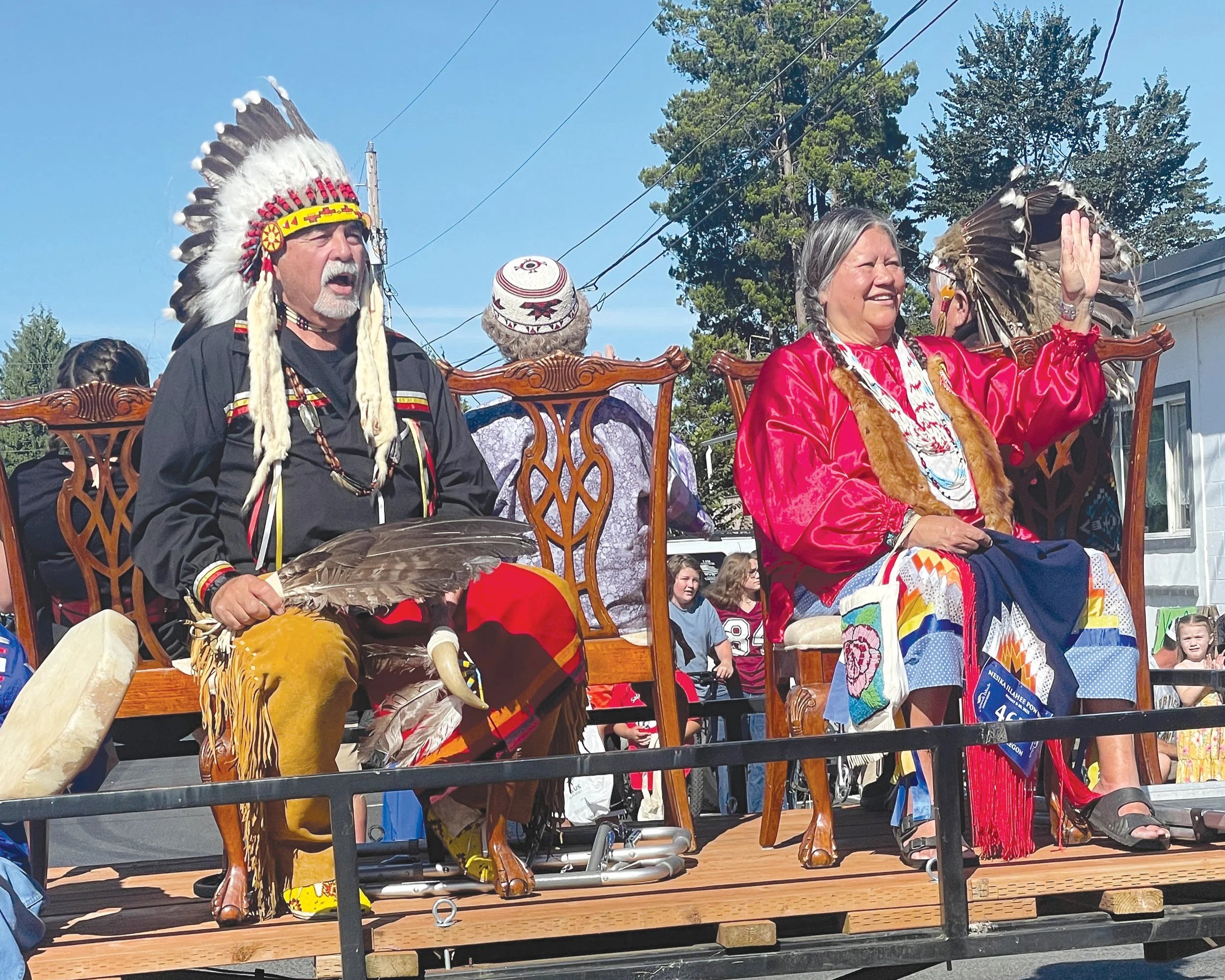
The Pauline Ricks Memorial Pow-Wow Grounds in Siletz will once again welcome dancers, drummers, artists and visitors from across the country to the annual Nesika Illahee Pow-Wow this Friday Aug. 7, through Sunday, Aug. 9.
Hosted by the Confederated Tribes of Siletz Indians, the three-day gathering celebrates Indigenous culture while welcoming Native and non-Native visitors to experience one of the region's longest-running cultural events.
The weekend begins Friday with memorials and giveaways from noon to 5 pm, followed by the Presentation of Crowns and Royalty Pageant at 6 pm and the First Grand Entry at 7 pm. Teen and youth competitive dancing preliminaries follow the evening's Grand Entry.
The annual Nesika Illahee Pow-Wow Parade steps off at 10 am on Saturday, with traffic diverted around Highway 229 so that floats, dancing and plenty of candy and prize tossing can ensue along the main street of Siletz.
Activities return to the pow-wow grounds for the Second Grand Entry at 1 pm and the Third Grand Entry at 7 pm, featuring competitive dancing, drum groups and special exhibitions.
The celebration concludes Sunday with the Final Grand Entry at noon, followed by special dances including the Team Dance, Owl Dance, Women's Basket Cap Special and Round Bustle Special for men. A traditional salmon dinner will be served in the afternoon, with drum and dance competition winners announced before the closing ceremony.
Throughout the weekend, more than 50 vendors will offer Native arts, crafts, jewelry and traditional foods while dancers and drum groups from across the United States and beyond fill the arena.
The pow-wow is a drug- and alcohol-free event. Because parking at the grounds is limited, visitors are encouraged to use the free shuttle service from park-and-ride locations in Siletz. Look for posted signs around the town pointing to the designated park-and-ride lots.
The Confederated Tribes of Siletz Indians are the most diverse confederation of tribes and bands on a single reservation in the United States. Tribal ancestors spoke 10 distinct languages with multiple dialects, and brought with them deep connections to more than 20 million acres of ancestral territory combined, including all of Western Oregon from the summit of the Cascade mountains to the Pacific and extending into what’s now southwest Washington State and northern California.
For more information, go to ctsi.nsn.us.