
One way to get a-head
Cascade Head offers one of the coast’s finest nature hikes
Story and photo by Michael Edwards
For the TODAY
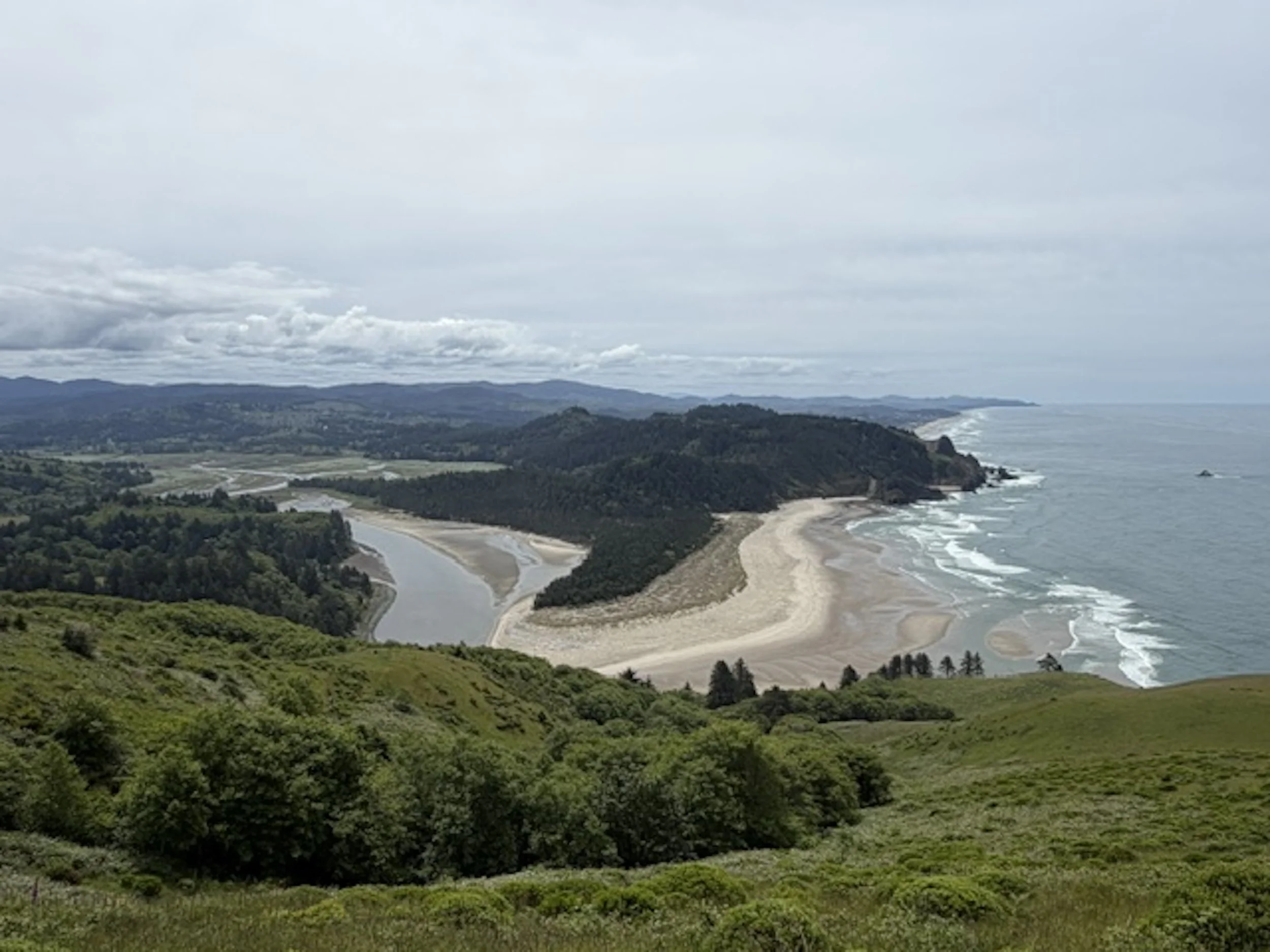
To reach Cascade Head’s high meadow takes a two and a half mile, 1,200 vertical foot ascent that begins at the confluence of Crowley Creek and the Salmon River at Knight Park.
Like the sodden land to the east, where the Salmon River fans out across the old Pixieland amusement park grounds, the restoration of Crowley Creek involved pulling invasive plants and removing flood control infrastructures. Prior to 2012, Crowley Creek was restricted by dykes and diverted by channels. Today, thanks to a years-long effort to deconstruct the old structures, the creek flows freely.
In the morning, when the fog is still heavy on the land, visitors sipping their last bit of coffee before the hike might spot a great blue heron snatching a Pacific treefrog from the muck or hear a belted kingfisher’s metallic chatter before it tucks its wings and dives headfirst into a school of salmon fry.
The first section of the Cascade Head trail parallels Savage Road and passes over a marsh of giant skunk cabbage. Moss-draped Sitka spruce shade head-high sword ferns. A fallen hemlock provides the perfect nursery for the next generation of conifers. Especially early in the morning, before the sane people awaken, the forest is alive with bird song. Despite the bright colors of tanagers and warblers, songbirds are difficult to see through the rainforest’s layered green canopy. Stop on the trail and remain quiet for a spell and catch a Pacific wren flitting in the understory and a hairy woodpecker probing a snag for grubs.
Cascade Head is known for its incredible views of the Pacific Ocean and for being the last stronghold for the Oregon silverspot butterfly, but visitors who walk slowly to the top and engage their senses will notice a well-worn elk path through the alders, hear two-story-high breakers hitting the rock islands in the ocean below and see a variety of common, but no-less-exceptional, creatures living their best lives in the reserve.
During the dryer months on the coast, turkey vultures patrol the skies above Cascade Head, sniffing the emerald headland for the scent of decay. Unlike the bald eagles who also frequent the reserve’s airspace, turkey vultures fly with their wings in a V shape, an orientation that allows the vulture to fly at treetop level and keeps the giant raptor steady during turbulent low-level flight. Though it might seem easy for the turkey vulture to sniff out a deer carcass rotting in a meadow, the raptors prefer fresh kills to week-old carcasses gone putrid. Even a scavenger has his standards.
While the turkey vulture’s six-foot wingspan tips from side to side for hours without a flap, the scavenger’s smaller cousin, the fork-tailed barn swallow, darts and rolls inches above the meadow grass in search of flying insects. With its long sharp wings, powerful forward-facing eyes and gaping mouth, the uber-maneuverable swallow devours up to 850 flying insects per day.
On the calf straining trek back down to Knight Park, a red-spotted garter snake slithers out of the grass and onto the trail, and before I can snap a picture, the snake vanishes back into the high grass. These brilliant-colored reptiles dine on rough-skinned newts. If you’ve spent any time walking along trails on the Oregon Coast, you’ve likely seen a newt standing motionless on the path, coaxing you to pick it up.
“Just once buddy, I dare you.”
Rough-skinned newts are deadly poisonous critters, but over the eons, the wily garter snake has evolved defenses against the newt’s toxins. In fact, according to the National Wildlife Federation, garter snakes are the only creatures that feed on rough-skinned newts.
If the turkey vulture is Cascade Head’s sanitation worker and the swallow its airborne insect pest control, then the garter snake is the “Fifty bucks if I eat that” member of the reserve’s animal kingdom.
Especially on summer weekends, hikers flock to Cascade Head. Heavy foot traffic and winter’s deluge have undermined the trail. Erosion exposes roots and makes the steps a challenge for short-legged people like me. To limit erosion and to protect the reserve’s plants, fungi and animals, please stay on designated trails, and at least on this trip, leave your precious pug at home. Finally, the squirrel heckling you from the spruce branch might look tasty, but hunting is also prohibited in the reserve.
Knight Park is located at 2341 N Three Rocks Road in Otis.