
A vine dining experience
Eat your way through Tillamook State Forest with expert-led workshop
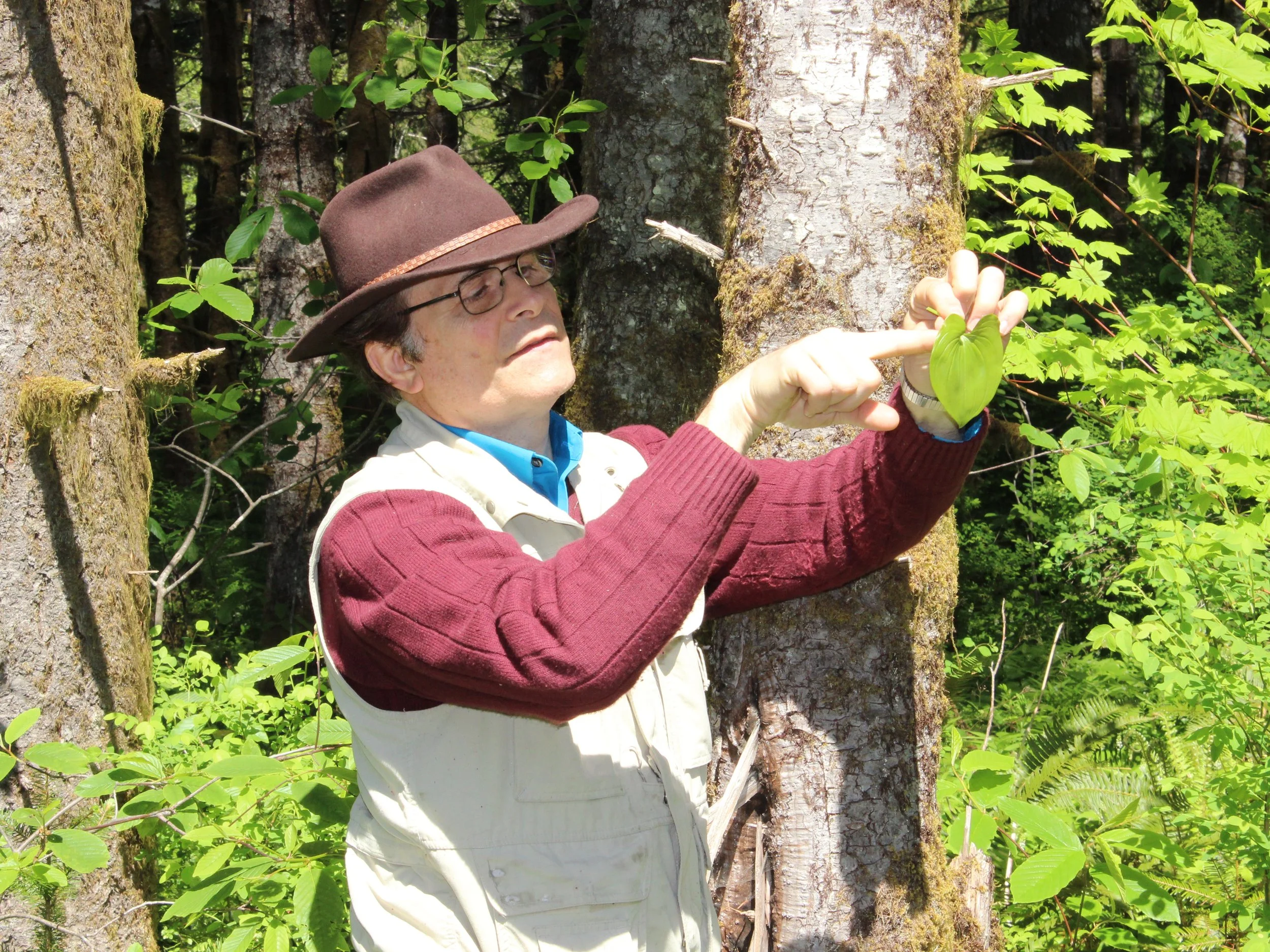
Dr. John Kallas at work • Courtesy photo
By Jordan Wolfe
For the TODAY
All the forest is a salad, if you know where to look.
Learning about, and sampling, the wide variety of wild springtime foods in the forests of the Oregon Coast is what’s on the menu at the Tillamook Forest Center next Saturday, April 25.
Registration closes on Wednesday, April 22.
Author and educator Dr. John Kallas will lead “Wild Food Foraging,” a three-hour program dedicated to identifying many wild edible plants native to Pacific Northwest forests to give those attending a greater connection to nature — and something to snack on.
“The forest is virtually a wild salad in the early spring,” Kallas said. “And it’s one of the most convenient sources of food that you can find anywhere because it’s lush and the soil is great and plants are just coming up right and left.”
Some of those plants include wild ginger, smooth yellow violet and lady fern fiddleheads.
“A lot of times it’s inspiring for people because there is this feeling that wild foods are rare and hard to find and difficult to identify and all that stuff,” Kallas said. “I shoot through all of that.”
A wild foods expert, Kallas obtained his PhD in nutrition in order to advance the field. He organizes roughly 30 wild food adventures annually and said the forests of the Oregon Coast are a special place for good eats due to the moderate climate and proximity to the ocean.
“The coast is even more abundant than the Willamette Valley, which is one of the most abundant places in North America for wild foods,” he said. “If you’re hiking or camping in someplace that’s analogous, you can just sit down, take out your sandwich, look around, grab some greens, throw them in your sandwich or add to a salad. There’s just so much food out there. It’s amazing.”
The workshop begins with an introductory session of about 90 minutes, starting indoors and covering concepts.
After a break, participants will venture out along the trails extending from the Tillamook Forest Center to learn, identify and, of course, sample plants growing natively.
Interpretive Media and Operations Specialist Alejandra Arellano said the visitor center — which recently celebrated its 20th anniversary — is making efforts to reintroduce programs that have been missing since the COVID-19 pandemic. Bringing back Kallas just made sense.
“He’s local and also talking about local edible plants,” Arrellano said. “We thought that that would be pretty much a direct connection to what we’re doing here at the Tillamook Forest Center and with the Oregon Department of Forestry as a whole.”
Kallas said the primary benefit of his workshop is to build stronger connections with nature.
“That’s number one,” he said. “Number two, it’s a fun recreational activity you can do all your life. Number three is the nutritional aspect.”
Kallas described Blue Zones, geographic regions around the world where people live past the age of 100, and said one of the factors for the health of those people is the consumption of a high variety of plant species.
“We might have a salad with maybe five ingredients or they may have 14 or 16 ingredients — and each of those is a different species,” he said. “And that’s where nutritional health really comes into the picture. So wild foods are adding hundreds of new species to your diet.”
Kallas understands that just one workshop is not enough to make anyone an expert in wild foods and issued a warning on solely relying on plant identification apps and AI due to dubious information on edibility of plants. He said one of the great benefits of attending a workshop taught by an expert, like the one he is hosting, is a deeper, practical understanding of what foods are actually useful.
“This is where expertise comes into the picture,” he said, describing a few common ferns in Pacific Northwest forests: one edible; one used for flavoring; and one that has been shown to cause stomach and esophageal cancer. “You need to be able to distinguish between the edible lady fern and the other ferns. You can’t just say, ‘I’m going to eat all the fiddleheads out there.’ That’s not going to work.”
But which wild foods in the Tillamook State Forest is Kallas most excited about?
“Uh,” he said. “All of them?”
Though reminding guests that construction on Highway 6 may add time to some trips, Arellano is excited for the upcoming event and the positive ramifications.
“It’s really kind of creating those connections, creating almost a sense of wonder,” she said. “Like, there’s these plants that are here that I didn’t know that were here all along, what more can there possibly be?”
“Wild Food Foraging” will be held Sunday, April 25 from 11 am to 2 pm at the Tillamook Forest Center, located at 45500 Wilson River Highway, 22 miles east of Tillamook along Hwy 6. Registration is required by Wednesday, April 22. The fee is $25, a reduction from the initial $40 thanks to a partnership with the State Forest Trust of Oregon. To register and submit payment, call 503-815-6807.